Why Flashcards Work
When I first started revising properly again, I had to remind myself what actually works.
It is very easy to spend hours reading notes, watching videos, highlighting text, or copying things out, and feel like you are making progress. Sometimes you are. But quite often, you are just becoming familiar with the material rather than learning it well enough to recall it later.
That is where flashcards can help.
They are simple, slightly old-fashioned, and not especially exciting. But used well, they are one of the most useful revision tools available.
What are flashcards?
A traditional flashcard is just a small card with a question, prompt, or clue on one side, and the answer on the other.
For example, one side might say:
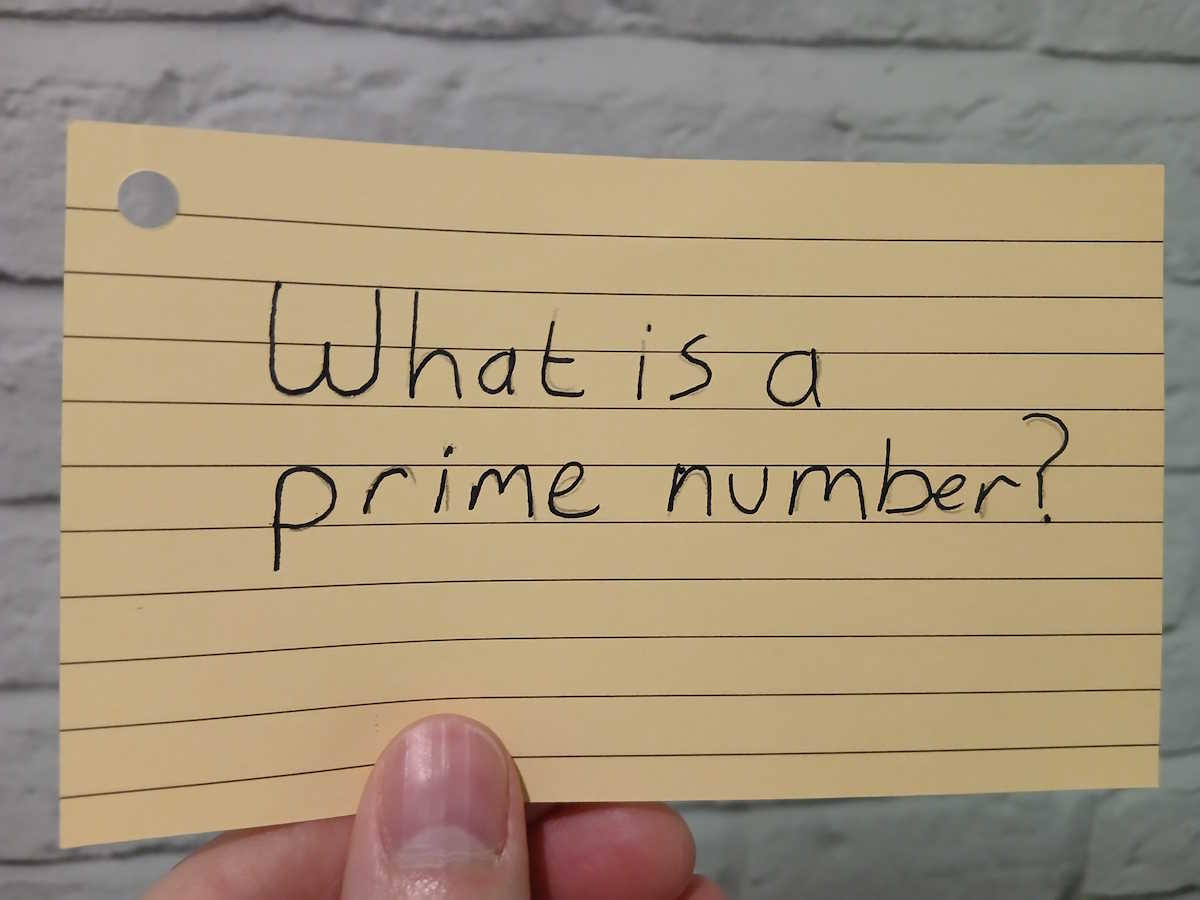
And the other side would say:
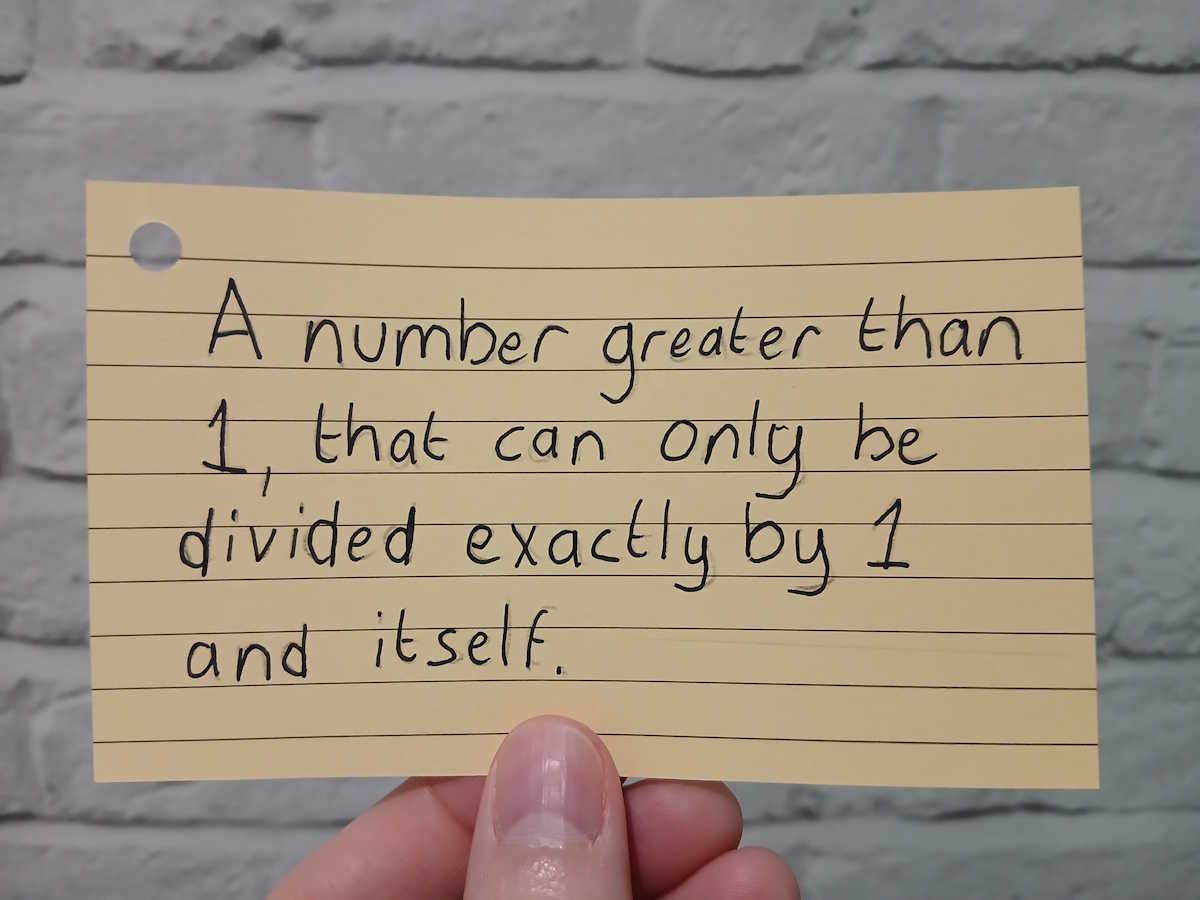
You look at the question side first, try to remember the answer, then turn the card over to check whether you got it right.
That is the basic idea.
You can buy blank cards, make your own from paper, or use ordinary index cards. There is nothing wrong with physical flashcards. They are cheap, simple, portable, and they do not need an app, a login, a subscription, or an internet connection.
For some people, writing the cards out by hand is part of the learning process. You have to decide what matters, phrase the question, and think about the answer. That effort can be useful in itself.
How people usually use flashcards
The usual method is straightforward:
- Read the question or prompt.
- Try to answer it without looking.
- Turn the card over.
- Check whether you were right.
- Put the card into a pile depending on how well you knew it.
You might have one pile for cards you know well and another pile for cards you need to practise again. Over time, the aim is to move more cards into the “known” pile.
That sounds basic, but the important part is step 2: you have to try to remember the answer before you look.
That is what makes flashcards different from just reading notes.
Active recall
Flashcards work because they force you to use active recall.
Active recall means trying to bring the answer out of your memory, rather than just recognising it when you see it.
Birmingham City University’s guide to active recall makes the same point: retrieval practice is what turns passive familiarity into usable knowledge.
Reading notes can feel productive because the material becomes familiar. You read a paragraph and think, “Yes, I know this.” But knowing something when it is in front of you is not the same as being able to remember it later in an exam, interview, meeting, or real situation.
Flashcards make that gap obvious.
If you cannot answer the question before turning the card over, you have found something you do not know yet. That is not a failure. That is the point.
A good revision tool should expose what you do not know, because those are the things you need to spend more time on.
Why flashcards are useful
Flashcards are especially good for small, focused pieces of knowledge.
They work well for things like:
- definitions
- key facts
- dates
- commands
- formulas
- vocabulary
- comparisons
- rules
- short explanations
- exam details
- things that are easy to confuse
For example, in a technical subject, a flashcard might ask what a command does, what a particular setting means, or when you would use one service rather than another.
For school revision, a card might ask for a definition, a quote, a scientific term, a historical fact, or a short explanation of a process.
The real benefit is that flashcards break a large subject into smaller pieces. Instead of trying to “revise biology” or “learn French”, you are dealing with one small question at a time.
That makes revision feel more manageable.
Why flashcards can be better than reading notes
Reading notes is not useless. You often need to read, watch, or listen to something before you can understand it.
The problem is that reading is easy to mistake for learning.
You can read the same page several times and still not be able to explain it from memory. You can highlight half a textbook and still not know which parts you can actually recall.
Flashcards make you answer.
That tiny bit of friction is the useful part. You have to stop and think. You have to commit to an answer. Then you find out whether you were right.
Getting a card wrong is not a problem. In fact, it is useful feedback. It tells you exactly what needs more practice.
With notes, weakness can stay hidden. With flashcards, weakness becomes visible.
What makes a good flashcard?
A good flashcard is usually small and specific.
For example, this is not a great card:
Explain networking.
That is too broad. It is hard to answer, hard to mark, and hard to learn from.
This is better:
What does DNS do?
Or:
What is the difference between an IP address and a domain name?
A useful flashcard should normally test one idea at a time. If a card has too much on it, you might get part of it right and part of it wrong, which makes it harder to judge whether you really know it.
Simple cards are usually better than clever cards.
Where physical flashcards fall short
Physical flashcards are still a good tool, but they do have limits.
They can be awkward to organise once you have a lot of them. If you want to group them by subject, difficulty, exam topic, or priority, that can quickly become messy.
They are also easy to lose, damage, or leave at home. If you make a mistake, you either have to cross it out or write the card again. If you want a duplicate card, you have to copy it manually.
The biggest limitation is scheduling.
With physical cards, you have to decide for yourself when to review each one. Cards you know well should appear less often. Cards you struggle with should appear more often. You can do that manually with different piles or boxes, but it takes effort to maintain.
That is where digital flashcard tools become useful.
Where Anki fits in
Anki is basically a digital flashcard system.
The core idea is the same as physical flashcards: you see a prompt, try to remember the answer, then check whether you were right.
The difference is that Anki adds features that are difficult or annoying to manage with paper cards.
It can schedule cards for you, so difficult cards come back sooner and easier cards come back later. It lets you organise cards into decks, add tags, search your collection, edit cards, duplicate them, and sync them between devices.
That does not mean physical flashcards are bad. They are still a perfectly valid option.
But if you are making lots of cards, revising over weeks or months, or dealing with a large subject, a tool like Anki can make the whole process much easier to manage.
In the next article, I will go through what Anki is, how to install it, and how the main pieces fit together.